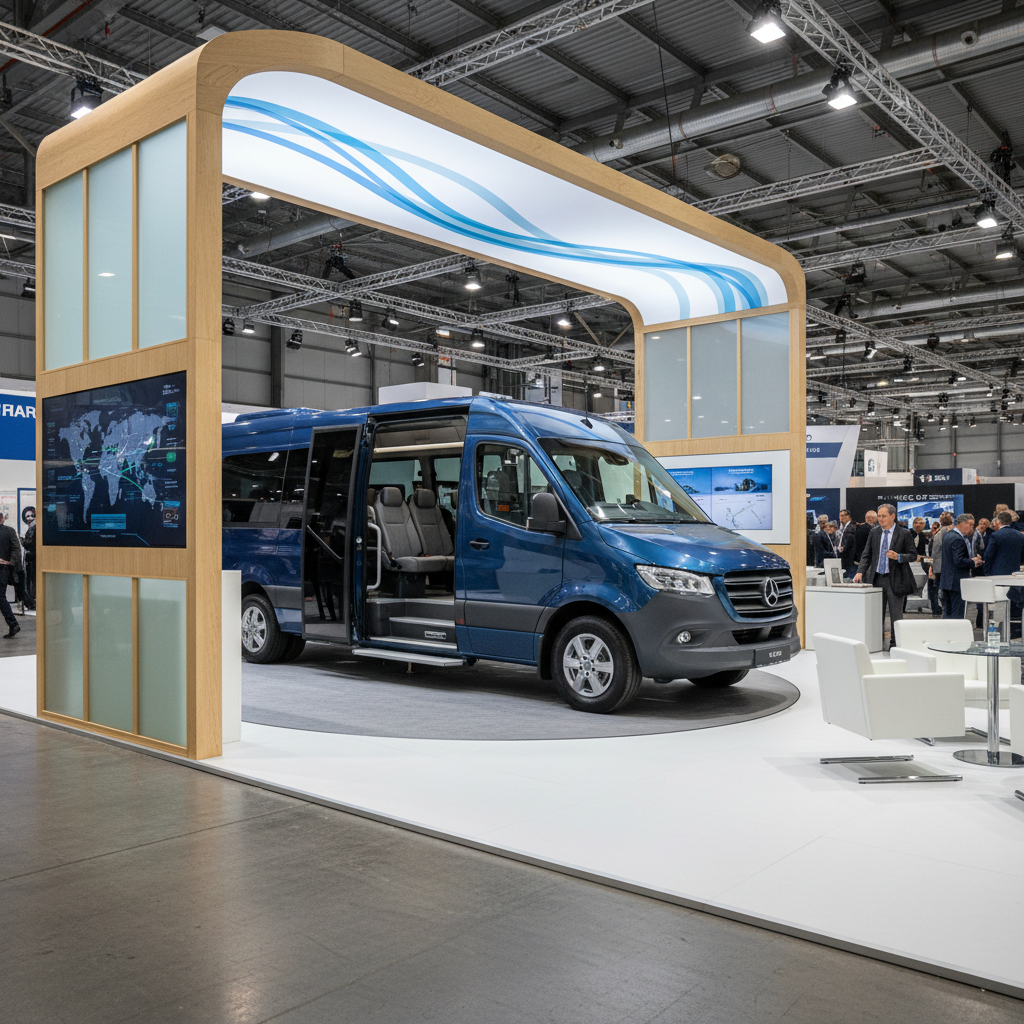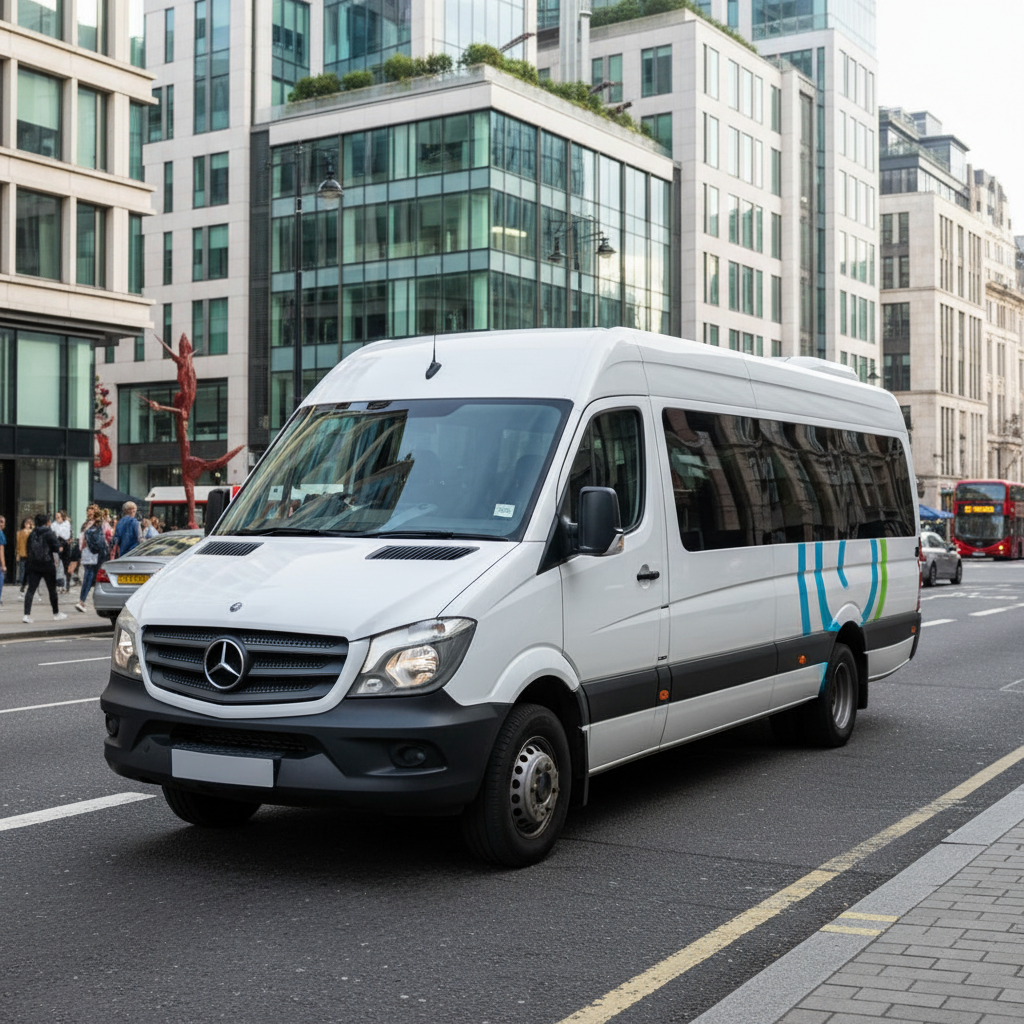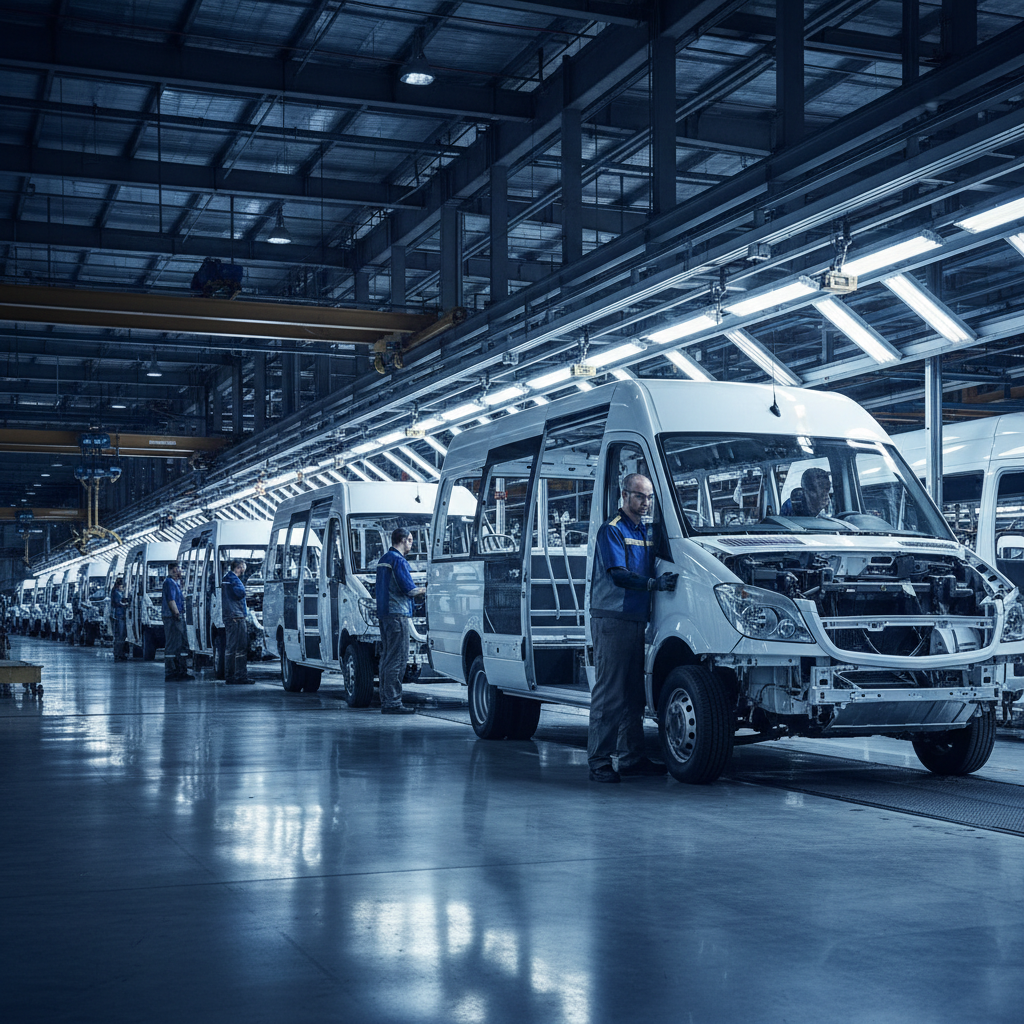
Every Pacific Tur Sprinter is converted in a single facility — our parent operation at Pacific Tur SRL in Romania — under a documented four-stage process. We do not outsource the conversion. We do not subcontract the body engineering. Each vehicle moves through the same defined sequence, on the same factory floor, with the same engineers responsible for the same operations.
Stage one is chassis preparation. Each vehicle begins as a factory-fresh Mercedes-Benz Sprinter chassis-cab delivered directly from the Mercedes-Benz plant. On arrival, the chassis is inspected, documented and queued for the conversion sequence. No vehicle enters the conversion line without complete factory documentation.
Stage two is body and glazing. This is where the Pacific Tur identity is established. Body cut-outs are made with precision tooling to accept our standard panoramic side windows — a defining feature of our vehicles. The window apertures are sealed, primed and finished to commercial-vehicle marine-grade specification. We then install the windows themselves, bonded with structural automotive adhesive systems that meet European structural-glazing standards.
Stage three is interior fit-out. The cabin is prepared with sound-deadening, thermal insulation, and the electrical loom required for our standard specification — including climate control, ambient lighting, USB-C charging at every seat, and the speaker array. Seats arrive from our partner Anlaş in pre-assembled modules and are mounted to engineered floor tracks that allow our standard configurations to be replicated with absolute consistency vehicle to vehicle.
Stage four is quality assurance and delivery. Every vehicle is taken through a documented QA sequence that covers water ingress, electrical function, ride and handling, and a final cosmetic review. The vehicle is then driven onto a transporter, fully type-approved, for delivery to the UK. Our UK team takes custody on arrival and conducts an independent pre-delivery inspection before handover.
The result is the kind of consistency that operators ask for and that the converted-vehicle market does not always deliver. Two vehicles ordered to the same specification, six months apart, are the same vehicle.